


 |
 |
|
Starting Assumptions
| # | Due Date | Pts | Activity | Time |
| 1 | Tuesday 11:59 p.m. |
10 | Starting
Assumptions Think about what you know already about the culture and period, share your knowledge and experience with other students in the class |
30 min. |
 What
most interests you about the 17th-century
historical context?
 **This
week we will devote our attention to Galileo's life and works. Everyone knows
something about Galileo, but few people really understand the circumstances
of his life.
|
Instructions for Starting Assumptions assignment:
|
Script of Janux Starting Assumptions video:
Get your backpack ready: it’s time to brainstorm another trip! This week, in our whirlwind tour of the history of science, let’s travel to early 17th-century Italy, the early 1600’s. The 17th century is the era of Kepler, Galileo, Descartes, William Harvey, Francis Bacon, Robert Boyle and Isaac Newton.
This is the final century we will visit on our tour, so we'll spend the next three weeks getting to know better some of these figures of 17th-century science in terms of their own place and time.
I hope you’ll make some meaningful and unexpected discoveries this week as we explore the strange new world of Galileo. Though we have just a limited time to visit, we'll not be like tourists in Venice or Florence who seek fast food at McDonald's. Our aim will be to get to know Galileo in terms of his own place and time, not just in terms of modern science.
In addition to the universities and court settings for science we have already discussed, which remained very important for the support of science, the 17th century saw the emergence of scientific societies such as the Accademia dei Lincei (Academy of the Lynx) and the Royal Society of London, which provided critical support to Galileo and Newton respectively, as we shall see. What do you know about these and other scientific institutions in the 17th century?
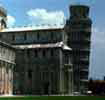
Everyone knows something about Galileo, but few people really understand the circumstances of his life. For example, what did Galileo do at the Leaning Tower of Pisa? Many people believe Galileo dropped two objects of differing weights from the top of the leaning tower of Pisa, in order to prove that they would strike the ground at the same time. However, there is no evidence that this event ever happened; it's just part of the Galileo mythology, an urban legend. Moreover, because of air resistance, the two objects would not have struck the ground at the same time, and Galileo knew it. Only in a vacuum, such as for astronauts on the Moon, does Galileo's law of free fall apply. Besides, the conclusions that such an experiment could suggest had already been explained in the Roman-era critique of Aristotle by John Philoponos.
So who was Galileo? How can we strip away our misconceptions? What was he really like?
As always when we’re planning a trip, we want to better understand what people in this place and time were up to.
What are some similarities Galileo’s world and our culture today?
How might these similarities help us to understand Galileo?
What are some differences between Galileo’s world and our culture today?
How might these differences pose an obstacle to our understanding of Galileo?
What do you think is the chief barrier or prejudice that obstructs modern appreciation of Galileo?
What would you most like to discover about Galileo this coming week?"
Please share your thoughts on these things. What are your starting assumptions?
Do you have a great quote for this page? Let me know! (If used, a new quote is worth 1 point extra credit)

|
HSCI 3013. History
of Science to 17th century |
spellcheck.net | wordcounter.net
Many thanks to the pedagogical model developed in Mythology and Folklore and other online courses by Laura Gibbs, which have been an inspiration for this course.
|
|
This course is currently undergoing major reconstruction to bring it into alignment with the new version of the course at Janux |
|||


