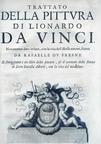
Besides life sciences and astronomy, then, the only other major figure of 15th
century science we'll devote much time to this week is Leonardo da Vinci.
Leonardo serves us well as a representative scientist of the 15th century, particularly
because he worked in courts rather than universities. As you read about him
pay special attention to the way court culture and court
patronage shaped his lifelong efforts. Despite Leonardo's remarkable
accomplishments and enduring interest to us, his manuscripts were safe-guarded
with utmost secrecy (to preserve their value to his court patrons). Unfortunately,
therefore, his writings were of little influence for the development of science.
For a brief sampling of 15th-century science under these headings, please carefully
read all of the pages linked to below (except for those marked
optional).
- T or F? Dioscorides produced De materia
medica, a synthesis of ancient pharmaceutical knowledge containing 900
descriptions of medically important plants and other substances.
-
T or F? Throughout the middle
ages, monasteries were centers of medical knowledge and practice.
-
T or F? Lindberg argues that the
spread of hospitals reflects the transformation of Greco-Roman medicine
in its early medieval Christian setting.
-
T or F? Hunayn ibn Ishaq translated
129 Galenic treatises into Arabic in the 9th century.
-
T or F? The Islamic appropriation
of Galenic medicine emphasized the separation of, and antagonism between,
medicine and philosophy.
-
T or F? One important encyclopedic
work of Islamic medicine was the Canon of Ibn Sina (Avicenna),
written around 1000.
-
T or F? The case of Trotula illustrates
how women were trained as skilled medical practitioners in Salerno, a city
in southern Italy.
-
T or F? The Canon of
Ibn Sina (Avicenna) was translated into Latin by Constantine the African
at the monastery of Monte Cassino, Italy.
-
T or F? In the middle ages, a
wide range of medical practitioners provided care, ranging from empirics
to apothecaries and surgeons to university-trained physicians.
-
T or F? University-based schools
of medicine were established in Salerno, Montpellier, Paris, and Bologna
by the 13th century.
-
T or F? In total contrast to the
practical orientation of empirics and apothecaries and barber-surgeons,
university medical faculty were entirely theoretical in their orientation
and training.
-
T or F? A person’s complexion
or temperament was thought to be a particular, individual balance among
the four humors of one’s body.
-
T or F? The most common medicines
of medical practice in the middle ages were minerals, chemically derived.
-
T or F? Medical doctors in the
middle ages regarded urinalysis as a key to understanding the state of the
heart.
-
T or F? Epidemic outbreaks were
often attributed to the influences of the stars and planets upon the air.
-
T or F? Surgeons in the middle
ages found theriac to be an effective anesthetic that would make patients
unconscious during invasive surgeries such as removal of bladder stones
or hernia correction.
-
T or F? Human dissection was prohibited
in the middle ages until the Church finally relented in 1500.
-
T or F? The Anatomia
of Mondino dei Luzzi became a standard guide to dissection for medical schools
in the late middle ages.
-
T or F? Two works of botany and
zoology were On Vegetables and On Animals by Albert the
Great, which contained both theoretical analysis and descriptive observations.
-
T or F? Leonardo da Vinci worked
most of his life in the Universities of Florence (Firenze), Milan, and
Paris.
-
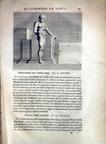
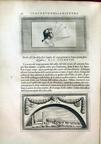
T or F? Leonardo’s Treatise
on Painting suggests that linear perspective geometrically represents
and conveys a divine rather than human perspective of the world.
-
T or F? The principles of linear
perspective were explained in writing by Leon Battista Alberti in 15th-century
Florence.
-
T or F? In linear perspective,
the vanishing point is located at the top vertex (corner) of an equilateral
triangle whose base is the horizon line.
-
T or F? As an only child, Leonardo’s
parents were able to afford him the best quality education Italian universities
had to offer.
-
T or F? Bill Gates paid 30 million
dollars for Leonardo’s Manchester Codex.
-
T or F? Leonardo died in Italy
at the end of the 15th century.
-
T or F? Gothic architects of the
late middle ages based their designs on those of the Roman writer Vitruvius.
-
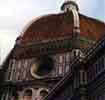
T or F? Brunelleschi’s dome is
a near-perfect hemisphere.


 This
week we will focus on medicine and the life sciences from the
middle ages through the 15th century. Please note especially what Lindberg has
to say about the Dioscorides tradition; we'll pick up from there when we consider
the herbals next week. We'll look at the work of 15th century astronomers
like Peurbach and Regiomontanus the week after that (Week 12).
 David
Lindberg, ch. 13, "Medieval Medicine and Natural History,".