


 |
 |
|
Archimedes of Syrakusa, d. 212 BC
 Mathematics
also flourished outside of Alexandria in the Hellenistic period.
 Archimedes
of Syrakusa (d. 212 B.C.) developed the field of mathematical statics and the
law of the lever with his Treatise on the Balance. He contributed to
arithmetic with The Sand Reckoner and The Cattle Problem,
both of which devised methods for expressing extremely large numbers. He deduced
many new geometrical theorems in On the Sphere and the
Cylinder, Measurement of the Circle, and On Spirals. He
developed the concept of density and what is now known as “Archimedes'
Principle” in On Floating Bodies. The work of Archimedes stands
as one of the most ingenious accomplishments in Greek mathematics, and was later
to significantly influence mathematicians and philosophers of the late middle
ages and Renaissance, particularly Galileo
(thumbnail, left).
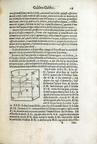
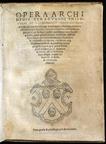
Below are some images from early printed editions of Archimedes held in the History of Science Collections:
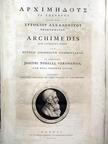
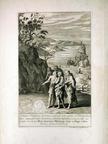
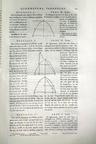
"Give me a lever and a place to stand and I will move the world." Archimedes

|
HSCI 3013. History
of Science to 17th century |
spellcheck.net | wordcounter.net
Many thanks to the pedagogical model developed in Mythology and Folklore and other online courses by Laura Gibbs, which have been an inspiration for this course.
|
|
This course is currently undergoing major reconstruction to bring it into alignment with the new version of the course at Janux |
|||


