
| Other names: | Iceland Spar (found in basalt caves), Island Spar, Calc spar |
| Mineral class: | Carbonate |
| Composition: | CaCO3, just like shells, bones, teeth, chalk, limestone, marble. |
| Hardness: | 3 |
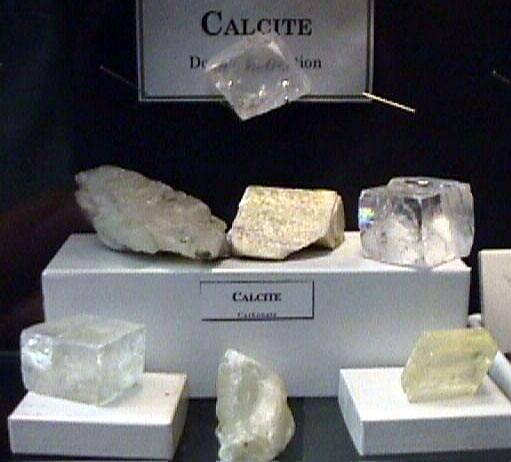
| Luster: | Glassy, Pearly, Vitreous |
| Color: | Colorless, White, grey |
| Streak: | White |
| Cleavage: | Perfect, 3 planes not at right angles |
| Specific Gravity: | 2.71 |
| Crystal form: | More than 300 crystal forms. Usually hexagonal: rhombohedral, scalenohedral or prismatic crystals (use magnifying lens if necessary to spot them). |
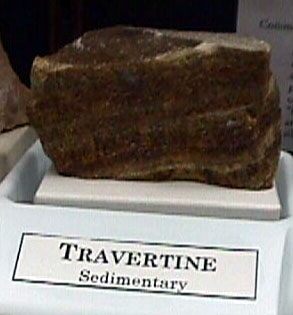
| Environment: | Chemically precipitates from high concentrations of calcium bicarbonate (Ca2+ + H2CO3), forming speleothems in caves (stalactites, stalagmites, helictites, soda straws, etc.) or travertine deposits from spring water. Also forms limestone, marble, chalk, tufa, and other rocks. May act as a cementing agent for sedimentary rocks, or form concretions within sedimentary formations (as well as septaria and crystals in geodes). |
| Uses: | Fertilizer, marble sculpture and building material, myriad mineralogical, chemical and other industrial uses. Lime for mortar and fertilizer. |
| Comments: |
 |